
Cannizaro House History: The Story Of Wimbledon’s Grand London Hotel

Set within 34 acres of Grade II* listed parkland on the edge of Wimbledon Common, Cannizaro House has stood for more than three centuries. Built in 1705 as Warren House, this Queen Anne residence has witnessed political alliances, literary gatherings, royal visits and quiet moments of private retreat. Today, as part of Hotel du Vin Wimbledon, it continues that tradition of hospitality, offering boutique accommodation within one of London’s most historically layered settings.
The story of Cannizaro House is not simply architectural. It is a narrative shaped by powerful statesmen, eccentric dukes, celebrated writers and devoted gardeners. From Georgian political salons to Victorian cultural evenings and modern weddings in the Orangery, the house has remained a place where people gather.
Understanding the history of Cannizaro House is to understand how continuity and change have unfolded side by side, preserving character while allowing each generation to leave its mark.
H2: Warren House origins and the Sicilian duke's legacy (1705-1841)
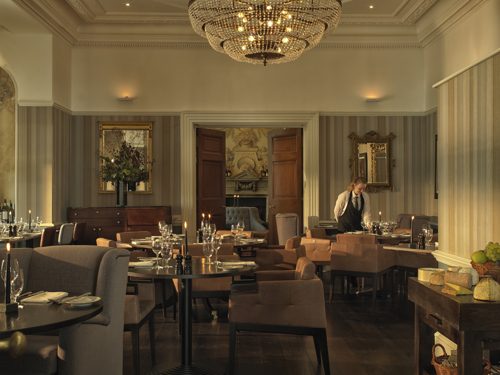
Warren House was constructed in 1705 in the Queen Anne style, positioned on what was then a 300-acre estate near Wimbledon Common. Its early decades were defined by influence and proximity to power, as the house became associated with figures who shaped Georgian Britain.
In 1817, Francis Platamone, Count St Antonio, leased the property with his Scottish wife, Sophia Johnstone. Their presence marked a turning point in the house’s identity. The couple entertained lavishly, welcoming figures such as the Duke of Wellington and Mrs Fitzherbert into their orbit. Music and society intertwined within its rooms, and the house gained a reputation for cultivated hospitality.
In 1832, Francis inherited the Dukedom of Cannizzaro in Sicily. He departed for Milan, but Sophia retained the title Duchess of Cannizzaro until her death in 1841. Over time, the spelling shifted subtly to Cannizaro, and the name endured, attaching itself permanently to the house and estate.
Even in its earliest chapters, Cannizaro House was a place of gathering, conversation and cultural exchange, a thread that continues through its present incarnation.
Political power and literary giants: The illustrious residents
Before the Sicilian connection, the estate had already played host to some of the most influential names of the 18th century. During the tenure of Henry Dundas between 1785 and 1806, the house became an informal centre of political discussion. As Home Secretary, Dundas welcomed King George III, Prime Minister William Pitt the Younger and William Wilberforce among others.
The so-called Dundas-Pitt evenings, reputedly fuelled by generous port, were not idle affairs. Decisions and alliances forged within these rooms rippled outward into national life. In 1793, Lady Jane’s Wood was planted on the estate to mark Dundas’s marriage, and it remains part of the park’s landscape today.
Earlier still, John Lyde-Brown, Governor of the Bank of England, resided here from 1757 to 1785. His collection of more than 300 classical sculptures was eventually sold to Catherine the Great, connecting Cannizaro House to a wider European narrative.
By the late 19th century, the atmosphere had shifted from politics to culture. Mrs Mary Schuster, resident from 1879 to 1896, transformed Cannizaro into a Victorian literary salon. Lord Tennyson, Oscar Wilde and Henry James were among those who visited. Amateur dramatic performances were staged in Cannizaro Wood, and garden parties became social fixtures.
The estate also welcomed the Maharajah Duleep Singh, Prime Minister Lord Aberdeen and, in 1936, Emperor Haile Selassie during his exile from Ethiopia. Across generations, Cannizaro House history reflects a remarkable breadth of influence.
Fire, rebuilding, and the Wilson family gardens (1900-1947)
In October 1900, disaster struck when a fire gutted much of the house. The rebuilding in 1901 respected its original character while introducing a glass conservatory that added a new architectural dimension. During the First World War, the property served as an officers’ convalescent home before being restored again in 1920.
The final private owners, E. Kenneth Wilson and his wife Adela, acquired the estate in 1920. As director of the Ellerman shipping line, Wilson travelled extensively, bringing botanical specimens back from America and Asia. Rare rhododendrons, azaleas and camellias were introduced to the grounds, many of which continue to flourish.
Under the stewardship of gardeners George Dillistone and Richard Allison, the estate evolved into a series of distinct garden rooms, each with its own character and planting scheme. In 1947, the property was sold to Wimbledon Corporation for £40,000, and the gardens were opened to the public in 1949. The house later served as a residential home and arts centre before its next transformation.
The botanical legacy of the Wilson family remains one of the estate’s defining features, anchoring Cannizaro House firmly within its landscape.
From municipal home to Hotel du Vin
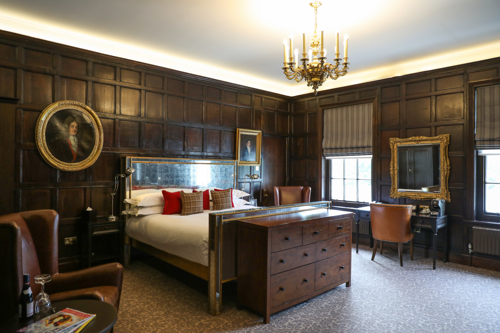
The 1980s marked Cannizaro House’s next transformation, when it reopened as a country house hotel within London, a concept that respected both its architectural integrity and its landscaped setting. Its later inclusion within the Hotel du Vin collection brought careful refurbishment rather than reinvention, preserving wooden panelling, period fireplaces and the generous Georgian proportions that give the house its quiet authority.
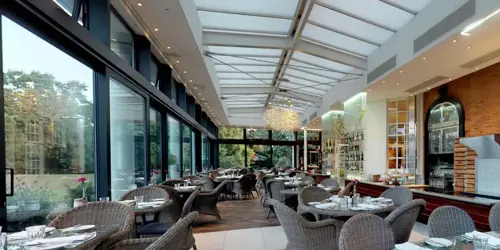
The Orangery, with floor-to-ceiling windows overlooking the park, introduces light and openness, complementing the intimacy of the original reception rooms. Bedrooms remain individually designed, some named in recognition of former residents such as Lady Hillary Wilson, ensuring that the connection between past and present feels genuine rather than decorative. Within the rooms and suites, historic character and contemporary comfort sit easily together, allowing the building’s story to remain part of the experience rather than a backdrop to it.
Set within 34 acres of public parkland, Hotel du Vin Wimbledon offers the rare sensation of country house seclusion while remaining firmly within London’s reach, a balance that has defined Cannizaro House for more than three centuries.
Cannizaro Park and Wimbledon Village setting
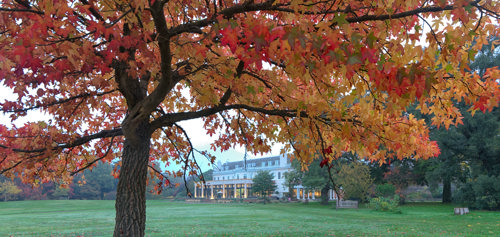
Cannizaro Park is central to the property’s identity. The 34-acre Grade II* listed landscape contains over 100 tree species and one of London’s most notable collections of rhododendrons, azaleas and camellias. The Italian Garden, Water Garden and the enduring Lady Jane’s Wood each offer distinct atmospheres, while the Diana and Fawn statue, installed in 1841, provides a focal point among the planting.
Seasonal change brings variation to the park. Spring introduces blossom and vibrant colour, summer deepens into lush greenery, autumn shifts the palette towards gold and rust, and winter reveals the architectural structure of the landscape. For guests, this setting becomes part of the experience, whether strolling before dinner or stepping out after breakfast into quiet, open space. The sense of retreat extends indoors as well, with the Take Time spa at Wimbledon offering treatments that reflect the same calm, restorative character found in the surrounding gardens.
Beyond the gates lies historic Wimbledon Village, with its Georgian buildings and independent shops, while Wimbledon Common stretches across 1,100 acres. The All England Tennis Club sits approximately one mile away, linking the estate to another layer of Wimbledon heritage. Despite this sense of seclusion, Wimbledon station offers District line and National Rail connections into central London, placing Cannizaro House within easy reach of the city while retaining its tranquillity.
Continuing the tradition of hospitality
For more than 300 years, Cannizaro House has been a place where people gather. The formality of Georgian political discussions gave way to Victorian literary evenings, which in turn evolved into garden parties, weddings and celebrations.
Today, that tradition continues in a different register. The Orangery hosts weddings and private events beneath high ceilings and expansive glass, echoing the entertaining of earlier centuries. The bistro sustains a culture of conversation over good food and carefully chosen wine, a quieter reflection of the Dundas and Pitt evenings that once animated the house.
Meetings, private celebrations and social events now unfold within rooms that have witnessed generations of change, yet the essence remains consistent. Cannizaro House endures not as a museum of the past, but as living heritage.
Those considering a stay or event at Hotel du Vin Wimbledon will find that the experience is shaped as much by its history as by its hospitality. Three centuries of stories reside within its walls, not as ornament, but as atmosphere.
Cannizaro House History FAQs
When was Cannizaro House built?
Cannizaro House was originally built as Warren House in 1705 in the Queen Anne style. After a devastating fire in 1900, the house was rebuilt in 1901, then lovingly restored in 1920 following its use as an officers' convalescent home during the First World War.
How did Cannizaro House get its unusual name?
The name derives from Francis Platamone, Count St Antonio, who leased Warren House with his Scottish wife Sophia in 1817. When Francis inherited the Dukedom of Cannizzaro in Sicily in 1832 and departed for Italy with his mistress, Sophia proudly maintained her title as Duchess of Cannizzaro until her death in 1841. The spelling changed slightly over time, and the name Cannizaro has remained ever since.
Which famous people have stayed at or visited Cannizaro House?
Cannizaro House has welcomed extraordinary guests across three centuries: King George III, Prime Ministers William Pitt the Younger and Duke of Wellington, literary giants Oscar Wilde, Lord Tennyson and Henry James, William Wilberforce, the Prince and Princess of Wales, the deposed Maharajah of Punjab, and Emperor Haile Selassie of Ethiopia. The house served as both a Georgian political gathering place and a Victorian cultural salon.
Can visitors access Cannizaro Park and gardens?
Yes, the 34 acres of Cannizaro Park remain in public ownership and are open to all visitors. The Grade II* listed gardens feature one of London's finest collections of rare trees, rhododendrons, azaleas and camellias, many planted by the Wilson family in the 1920s-1940s. Hotel guests enjoy the special privilege of being surrounded by this botanical treasure.
What makes Hotel du Vin Wimbledon historically significant?
Hotel du Vin Wimbledon occupies one of London's most historically rich country houses. Built in 1705, Cannizaro House hosted Georgian political gatherings with George III and William Pitt, Victorian literary salons with Oscar Wilde and Tennyson, and diverse residents from governors to maharajahs. The house survived a devastating 1900 fire, served wounded officers during WWI, and sits within Grade II* listed parkland. It represents rare continuity: three centuries of hospitality in its original historic setting.