
Inside the Avon Gorge Hotel: A Bristol Landmark with a Story

There are hotel settings, and then there is this one. The Avon Gorge Hotel sits on the edge of one of the most dramatic pieces of urban geography in the UK, perched above a gorge 250 feet deep with the Clifton Suspension Bridge framed directly in front of it. It is the kind of view that stops guests mid-sentence, and it has been doing so for well over a century.
But the setting is only part of what makes this place interesting. The hotel's history is genuinely woven into Bristol's own: its Victorian origins, its long relationship with the neighbourhood of Clifton, and its evolution through different eras of the city's life. History here is not decorative. It is structural.
This is an exploration of that story: the Avon Gorge and how it shaped the city around it, the hotel's origins and development, what it looks and feels like today as Hotel du Vin Bristol Avon Gorge, and why the setting continues to be one of the most distinctive of any hotel in the UK.
The Avon Gorge and Clifton: setting the scene
Before the hotel, there is the landscape. Understanding the Avon Gorge and the neighbourhood that grew up on its rim gives the hotel's position its proper context.
A gorge that shaped a city
The Avon Gorge is one of Bristol's defining geographical features: a limestone cleft roughly 250 feet deep, carved over millennia by the River Avon as it cut its way from the Mendip Hills towards the Bristol Channel. It runs along the western edge of the city, and for most of Bristol's history it was not incidental but central, the passage through which ships moved in and out of what was once one of England's most significant ports.
The river below the gorge carried trade goods from across the Atlantic and beyond for centuries. The wealth that trade generated shaped the city above it, and nowhere did that wealth settle more visibly than in Clifton: the neighbourhood that grew up on the gorge's eastern rim, characterised by Georgian and Victorian terraces, broad streets, and a reputation as Bristol's most desirable address that it has more or less maintained ever since.
Brunel's bridge as a neighbour
The Clifton Suspension Bridge needs little introduction, but its relationship to the hotel is worth dwelling on. Designed by Isambard Kingdom Brunel and completed in 1864, it spans the gorge at a height of 245 feet, connecting Clifton on the Bristol side to Leigh Woods on the Somerset bank. It is one of the most recognised structures in the UK, and from the hotel's terrace it is not a distant landmark but an immediate presence: visible in full, close enough to read its details, present in the peripheral view from the dining tables and the upstairs rooms.
The bridge and the hotel share a context. Both are Victorian in origin, both are situated at one of the most dramatic natural features in any British city, and both have become inseparable from how Bristol presents itself to the world. Hotel du Vin's own guide to the Clifton Suspension Bridge covers its history in more detail for those who want the full story.
The history of the Avon Gorge Hotel
The hotel's origins are Victorian, and its character reflects that throughout: not as pastiche, but as a building that has absorbed its own history rather than been emptied of it.
Victorian origins
The Avon Gorge Hotel was built to serve the wealthy visitors drawn to Clifton in the late 19th century, when the neighbourhood was at the height of its fashionable reputation. Clifton in this period was a hub for Bristol's professional and merchant classes: a place of assembly rooms, promenades, and the kind of genteel social life that required appropriate venues. The hotel's elevated position on the gorge edge, its architectural character, and its direct relationship with the suspension bridge made it a natural gathering point for that community.
The building retains much of its period character: the proportions, the detailing, and above all the relationship between structure and setting that was clearly intentional from the outset. The elevated terrace, which has always been the hotel's most defining feature, was designed to take full advantage of the view across the gorge towards the bridge. That decision has proved remarkably durable.
From landmark to Hotel du Vin
The hotel passed through various phases across the 20th century, as most buildings of this age and prominence do, and eventually became part of the Hotel du Vin collection. The refurbishment that followed was guided by a principle that runs through the brand's approach to its historic properties: work with what is already there rather than impose a uniform template over it. The Avon Gorge is a strong example of that philosophy in practice.
Original features were retained. The terrace was preserved and enhanced. The relationship between the building and the gorge, which is the hotel's essential identity, was celebrated rather than obscured. The result is a property that reads as genuinely itself: a Victorian building in a Victorian neighbourhood, updated carefully and operated with the food, wine, and hospitality culture that Hotel du Vin brings to its collection.
What the hotel is like today
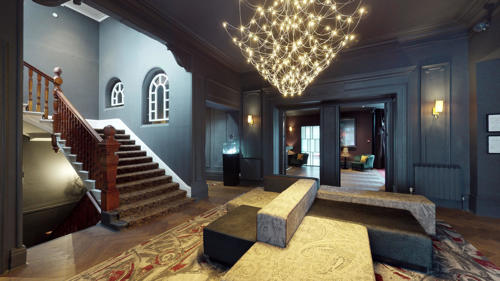
The history gives the hotel its character. The present-day experience is where that character becomes something you can actually stay in.
Rooms, views, and the terrace
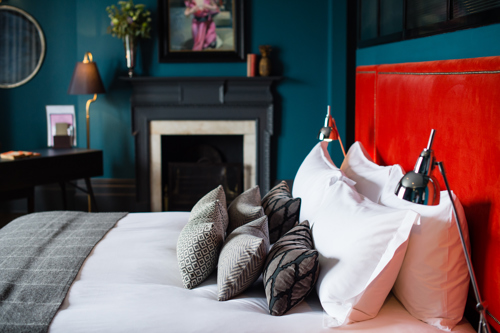
The rooms are individually designed in the way that has become a hallmark of Hotel du Vin properties: no two are identical, each reflecting the building's character through its own combination of period features, bold colour, and considered detail. The rooms overlooking the gorge and the bridge are the ones most guests request, and the view from those windows is genuinely difficult to leave in the morning.
The terrace is the hotel's signature space. Outdoor seating with an unobstructed view of the Clifton Suspension Bridge, used for drinks and dining through the warmer months, and the kind of spot that earns its place on lists of the best outdoor spaces in Bristol year after year. In the evenings, with the bridge lit and the gorge falling away below, it is one of the more memorable places to be in any UK city.
Bistro du Vin and dining
Bistro du Vin operates as a destination in its own right rather than simply as the hotel's restaurant. The menu takes classic French brasserie cooking as its reference point: confident, ingredient-led, and built around a wine list that reflects the seriousness with which Hotel du Vin approaches that side of the offer. The atmosphere is relaxed rather than formal, suited equally to a weeknight dinner for two and a longer, more celebratory meal.
The bistro draws Bristol locals as well as hotel guests, which is the reliable indicator that it is doing the right things. The hotel is genuinely part of the life of Clifton rather than separate from it, and the bistro is the clearest expression of that. Société du Vin membership is worth considering for those who plan to engage with the wine offer more than once.
Exploring Bristol from the Avon Gorge Hotel
The hotel's position in Clifton makes it both a destination in itself and a natural base for exploring the wider city.
Clifton and the suspension bridge
Clifton Village is on the doorstep: the main streets lined with independent shops, cafés, and restaurants that give the neighbourhood its particular character. A walk across the Clifton Suspension Bridge and back takes around 20 minutes, offers views straight down into the gorge, and ends at the bridge visitor centre where the full story of its construction, including Brunel's original designs and the long delays before its completion, is well told. The Hotel du Vin guide to the bridge provides useful context for planning the visit.
Bristol city centre and beyond
Bristol city centre is accessible from the hotel in around 15 minutes by taxi or public transport, and the offer there is substantial. The harbourside has been one of the UK's more successful waterfront regenerations; the Old City has independent restaurants and bars in genuinely historic surroundings; and Bristol's reputation as a city for street art is built largely on Banksy's ongoing presence, which the Hotel du Vin street art guide covers well. The broader guide to places to see in Bristol is a useful planning resource for a longer stay. The SS Great Britain, Brunel's other Bristol masterpiece, is moored in the Great Western Dockyard and well worth a half-day.
Planning your stay
The Avon Gorge Hotel is well placed for both first-time Bristol visitors and those returning to the city. Here is what to know before you book.
Getting to the Avon Gorge Hotel
Bristol Temple Meads is the city's main rail hub, with regular services from London Paddington, Cardiff, and Birmingham. Journey time from London runs at around one hour forty-five minutes on the faster services. The hotel is in Clifton, a short taxi or bus ride from the station. By car, Bristol is well connected via the M4 and M5; Clifton has limited on-street parking, so it is worth checking arrangements with the hotel directly before arriving.
Who the hotel suits
The Avon Gorge Hotel suits a range of guests particularly well. Couples on a city break get one of the most characterful options in Bristol, with a setting that is genuinely hard to match. Families using Bristol as a base have the gorge, the bridge, and the wider city within easy reach. Those attending events at Bristol's venues, whether music, theatre, or sport, will find Clifton a more interesting base than the city centre alternatives.
For those looking to combine a stay with a working visit or a private celebration, the hotel offers meetings facilities and social and private events spaces. Current Hotel du Vin offers are worth checking before booking. To book a room, the rooms and suites page covers the options in full.
Avon Gorge History FAQs
What is the history of the Avon Gorge Hotel?
The Avon Gorge Hotel has its origins as a Victorian establishment built to serve Clifton's fashionable visitors in the late 19th century. Perched above the gorge and looking out towards the Clifton Suspension Bridge, the building became one of Bristol's most recognisable landmarks. It is now part of the Hotel du Vin collection, sensitively refurbished to preserve its period character while offering the dining, wine, and boutique accommodation the brand is known for.
Where is the Avon Gorge Hotel?
The Avon Gorge Hotel is located in Clifton, Bristol, on the edge of the Avon Gorge. The hotel sits directly opposite the Clifton Suspension Bridge and is within easy walking distance of Clifton Village, with Bristol city centre accessible by taxi or public transport in around 15 minutes.
Can you see the Clifton Suspension Bridge from the hotel?
Yes. The Clifton Suspension Bridge is visible from the hotel's terrace and from a number of the rooms, making it one of the most distinctive aspects of a stay at Hotel du Vin Bristol Avon Gorge. The terrace is open for drinks and dining during warmer months, with the bridge as an uninterrupted backdrop.
What is there to do near the Avon Gorge Hotel?
The hotel's Clifton location offers immediate access to the neighbourhood's independent shops, cafes, and restaurants, as well as the Clifton Suspension Bridge and its visitor centre. Bristol's wider offer, including the harbourside, the SS Great Britain, and Banksy's street art trail, is easily reached from the hotel. The Avon Gorge itself has walking paths along both sides, and the gorge viewpoints are a short walk away.
Is Hotel du Vin Bristol Avon Gorge good for a city break?
Hotel du Vin Bristol Avon Gorge is one of the most characterful options for a Bristol city break. The combination of an exceptional setting, individually designed rooms, a well-regarded bistro, and a central Clifton location makes it well suited to couples, food and wine enthusiasts, and anyone who wants a base with genuine character in one of the UK's most vibrant cities.