
Things to Do in Stratford-upon-Avon: A Guide to Shakespeare’s Home

Stratford-upon-Avon is one of England's most visited towns, and the reasons are easy to understand. It is compact and walkable, genuinely rich in literary and cultural heritage, and set on a river that gives the whole place a particular quality of light and atmosphere that larger cities rarely manage. The Shakespeare connection draws visitors from across the world, but it is far from the only reason to come.
The town works for an unusually broad range of visitors. Couples find a well-established culture of theatre evenings, good restaurants, and riverside walks. Families have hands-on historic attractions, punting on the Avon, and Warwick Castle just eight miles away. Culture-led travellers have the Royal Shakespeare Company, a portfolio of well-preserved historic houses, and easy access to the Cotswolds. Two days is enough to do it properly; one is enough to want to come back.
Hotel du Vin Stratford-upon-Avon sits in the heart of the town, within easy walking distance of the RSC and the Shakespeare Houses, and makes a natural base for all of it. The following covers the literary landmarks, the river, food and drink, day trips, and the practical details for planning a visit.
Shakespeare's Stratford: the literary landmarks
The Shakespeare-related attractions are the reason most people come, and they reward more time than a hurried tour allows. The Shakespeare Birthplace Trust manages a portfolio of five properties, and the town's wider literary atmosphere is present in ways that go well beyond the ticketed sites.
Shakespeare's Birthplace and the Shakespeare houses
Shakespeare's Birthplace on Henley Street is the most visited attraction in town: a timber-framed house where Shakespeare was born in 1564, with period rooms and well-presented exhibitions on his life, work, and the world he inhabited. It is the obvious starting point and worth the visit even for those who consider themselves well acquainted with the subject.
The broader Shakespeare Houses portfolio offers five properties in and around Stratford, each with its own character. Anne Hathaway's Cottage in Shottery, a short walk or cycle from the town centre, is a beautifully preserved thatched farmhouse with gardens that make it worth visiting independently of the Shakespeare connection. Mary Arden's Farm in Wilmcote brings the Tudor agricultural world to life in a genuinely engaging way, particularly for families. Hall's Croft, the home of Shakespeare's daughter and her physician husband, and New Place, the site of the house Shakespeare retired to, complete the portfolio.
A half-day built around two of the houses and the Birthplace covers the essentials comfortably. A full day allows the full portfolio at a pace that does not feel rushed.
The Royal Shakespeare Company
The RSC is a world-class reason to visit Stratford independently of the Shakespeare heritage. The Royal Shakespeare Theatre and the Swan Theatre stage productions year-round, covering Shakespeare's canon alongside other classic and contemporary work, and the quality is consistently high. Booking ahead for evening performances is strongly advisable, particularly for weekend dates and popular productions.
A pre-show dinner at Bistro du Vin is a natural pairing: close enough to walk to the theatre comfortably, and the kind of meal that sets the evening up well without rushing it. The RSC's rooftop viewing tower is free to visit and offers excellent views across the town and over the River Avon, making it worth adding to a daytime itinerary even for those not attending a performance.
The River Avon and outdoor Stratford
The River Avon runs through the centre of Stratford's life as much as through its geography. The outdoor offer along its banks and beyond gives the town a dimension that is easy to overlook when the literary heritage is so prominent, but it is one of the more rewarding parts of a visit.
Walking, punting, and the riverside
The towpath along the Avon is the natural place to start. Bancroft Gardens, adjacent to the RSC theatre and the Clopton Bridge, is a well-kept riverside park where the theatre, the swans, and the passing narrowboats combine to create the specific quality of atmosphere that Stratford does particularly well. The walk along the riverbank in either direction from here is pleasant and unhurried.
Punting and rowing boat hire from the riverbank offer a more active way to spend a riverside afternoon. Both are popular with families and couples, and neither requires any particular expertise. The Stratford Greenway, a walking and cycling trail following a former railway line out of town towards Long Marston, offers a quieter alternative for those wanting to get away from the town centre without going far.
Stratford-upon-Avon Butterfly Farm
The Butterfly Farm, located near the river close to the town centre, is Europe's largest butterfly enclosure and one of the more reliably enjoyable family attractions in Stratford. Tropical species, a tropical rainstorm zone, and various other insect-related exhibits occupy a large glasshouse complex that tends to hold younger visitors' attention well. It is genuinely close to the centre, which makes it easy to combine with a riverside walk or a visit to one of the Shakespeare properties.
Food, drink, and where to eat in Stratford-upon-Avon
Stratford has a well-developed food and drink scene that reflects both the volume of visitors and the town's established culture around theatre evenings. Pre-show and post-show dining is a genuine part of how the town operates, which means the quality of the offer matters and, on the whole, reflects that.
Dining in town
Independent restaurants, riverside cafés, and historic pubs are distributed through the town centre within a walkable area. The combination of a substantial visitor economy and a year-round evening culture around the RSC has produced a dining scene that is more consistent and ambitious than many towns of comparable size. Several restaurants have built a following among both visitors and locals, and the town's historic pubs offer good food alongside the atmosphere of genuinely old buildings.
Dining at Hotel du Vin
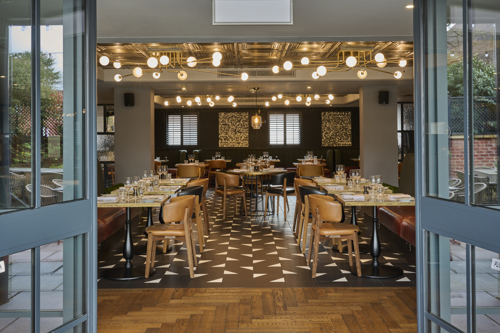
Bistro du Vin is the kind of hotel restaurant that earns its own reputation in a town. The menu takes classic French brasserie cooking as its foundation: confident, seasonal, and built around a wine list that Hotel du Vin takes seriously as a point of difference. The atmosphere is relaxed rather than formal, and the pace suits both a pre-theatre dinner with time to spare and a longer, more celebratory meal with no particular timetable. Société du Vin membership is worth considering for those who want to engage more deeply with the wine offer, and current Hotel du Vin offers are worth checking before booking.
Beyond the town: day trips from Stratford-upon-Avon
Stratford's position makes it a particularly good base for the wider region. The Cotswolds are on the doorstep, Warwick is eight miles away, and several of the Midlands' most visited attractions are within easy reach.
The Cotswolds
Stratford sits at the northern edge of the Cotswolds, which puts some of the most visited villages in England within straightforward day-trip range. Chipping Campden, with its main street of honey-coloured limestone buildings, is around 12 miles away. Broadway, one of the most photographed villages in the Cotswolds, is similarly close. Bourton-on-the-Water, further south, offers a different character: a village centred on a shallow river running through its main street. The contrast between Stratford's literary bustle and the quieter pace of the villages is part of what makes the combination work well as a short break.
Warwick Castle and beyond
Warwick Castle is eight miles from Stratford and one of the most visited historic attractions in the Midlands. The castle is well preserved, extensively programmed with events throughout the year, and pitched effectively at families as well as history enthusiasts. It rewards a full day. Kenilworth Castle, slightly further north, offers a different experience: substantial and impressive ruins in a quieter setting, with considerably fewer visitors and a more contemplative atmosphere. Both are accessible by car from Stratford in under 20 minutes.
Planning your visit: practical tips
Stratford is a straightforward destination to reach and an easy one to navigate on foot once you are there. Here is what to know before you go.
Getting to Stratford-upon-Avon
Stratford is well connected by rail. From London Marylebone, direct services via Chiltern Railways take around two hours. From Birmingham, trains run frequently and take under an hour. Oxford is also served directly. By car, Stratford is accessible via the M40, with junction 15 the standard approach from the south; parking options are available in the town centre, though it is worth arriving early on busy weekend days.
Staying in Stratford-upon-Avon
The case for an overnight stay rather than a day trip is clear: Stratford's atmosphere shifts noticeably in the evening once the day-tripper coaches have gone. The town feels more itself, the restaurants and bars are more relaxed, and the RSC performance followed by a late walk along the river is a significantly better experience than trying to cover it all before the last train.
Hotel du Vin Stratford-upon-Avon offers individually designed rooms, Bistro du Vin, and a central location within walking distance of the RSC and the Shakespeare Houses. Meetings facilities and social and private events spaces are available for those combining a visit with a working or celebratory occasion. Book your stay at Hotel du Vin Stratford-upon-Avon and explore one of England's most beloved towns at your own pace.
Things to do in Stratford-upon-Avon FAQs
What is Stratford-upon-Avon famous for?
Stratford-upon-Avon is best known as the birthplace of William Shakespeare. The town is home to several Shakespeare-related attractions managed by the Shakespeare Birthplace Trust, including Shakespeare's Birthplace on Henley Street, Anne Hathaway's Cottage, and New Place. It is also home to the Royal Shakespeare Company, which stages world-class productions at the Royal Shakespeare Theatre and Swan Theatre throughout the year.
How many days do you need in Stratford-upon-Avon?
Two days is ideal for a comfortable visit to Stratford-upon-Avon. The first day can be spent exploring the Shakespeare houses and the town centre, with an evening performance at the RSC. A second day allows time for the riverside, a day trip to the Cotswolds or Warwick Castle, and a more relaxed pace overall. Staying overnight also lets you experience the town once the day-trip crowds have gone.
Is Stratford-upon-Avon worth visiting?
Yes. Stratford-upon-Avon is one of England's most rewarding small towns, offering a combination of genuine literary heritage, excellent theatre, pleasant riverside scenery, and good food and drink. It works equally well as a day trip or a short break, and its position on the edge of the Cotswolds makes it a strong base for exploring the wider region.
What can families do in Stratford-upon-Avon?
Families are well catered for in Stratford-upon-Avon. Mary Arden's Farm offers hands-on Tudor farm experiences for children, while the Butterfly Farm near the river is a popular stop for younger visitors. Punting and rowing on the Avon is a relaxed afternoon activity, and Warwick Castle, just eight miles away, is one of the most family-friendly days out in the Midlands.
Where should I stay in Stratford-upon-Avon?
Hotel du Vin Stratford-upon-Avon is one of the town's most characterful places to stay, with individually designed rooms, a celebrated Bistro du Vin restaurant, and a central location within easy walking distance of the RSC and the Shakespeare Houses. It suits couples on a theatre break, families wanting a comfortable base, and anyone looking to explore the town and the surrounding Cotswolds countryside.