
Exeter Beyond the Cathedral and Quayside

Exeter rewards the visitor who goes looking for it properly. The cathedral and the quayside are genuinely worth the time, but they are the beginning of the city rather than the whole of it, and most visitors leave without having found the more interesting layers underneath.
The more surprising version of Exeter is underground, along the estuary, and out on the moor. Medieval water passages you can walk through beneath the city centre. A scenic railway that follows the Exe south to a Dutch-influenced merchant town most visitors have never heard of. Dartmoor within half an hour, for anyone who wants open countryside without a long drive. And a food and drink scene that has grown into something worth travelling for without losing the character that makes it feel like a real place rather than a curated destination.
Hotel du Vin Exeter sits in a former Eye Infirmary on Magdalen Street, with a walled garden, a spa with a heated outdoor pool, and Bistro du Vin a short walk from Cathedral Green. It is a hotel worth arriving at rather than just sleeping in, and a base that suits the more interesting version of the city rather than the obvious one.
The cultural depth beneath the surface
Exeter's history runs considerably deeper than its medieval fabric suggests, and the city has done an unusually good job of making that history accessible. The result is a cultural offer that rewards the curious: not just the obvious landmarks, but experiences that feel genuinely distinctive rather than replicated in a dozen other UK cities. The places worth starting with are underground, on foot, and free.
Exeter's Roman walls and underground passages
Exeter was one of only four cities in Roman Britain to have a legionary fortress, and traces of that history are visible throughout the city centre. The Exeter Underground Passages are the most distinctive cultural experience in the city: a network of medieval passages built to carry fresh water into the city, open to guided tours, and genuinely unusual in any UK context. Few city breaks offer anything quite like them.
The Roman city wall walk is a natural complement. Sections of the original wall survive and form part of a walkable circuit around the city centre, giving a sense of Exeter's scale and age that the cathedral alone cannot provide.
The Royal Albert Memorial Museum
RAMM is one of the South West's finest free museums, and one of the most underrated in the country. The collection spans Devon and Exeter's history, natural history, and global connections through its World Cultures galleries, and a changing programme of touring exhibitions means it rewards repeat visits in a way that more static museums often don't.
It is also an easy walk from Hotel du Vin, which makes it a natural morning stop before lunch at Bistro du Vin.
Exeter's independent arts and cultural scene
Exeter Phoenix is the city's independent arts centre, with a programme spanning visual art, film, music, and live performance that reflects a city with a genuine creative community rather than a manufactured cultural offer.
The Cathedral Quarter and the streets around it reward a slow morning's exploration: independent shops, galleries, and cafes concentrated in an area that feels lived-in rather than curated for visitors. Exeter's university presence gives the city a lively, year-round atmosphere that does not depend on tourist season to sustain it.
Outdoor Exeter: The river, the walls, and beyond
Exeter's outdoor offer is more varied than most visitors expect, and it extends well beyond the quayside that tends to be the first stop on any visit. The Exe Estuary gives the city a natural reach southwards that few comparable destinations can match, with walking and cycling trails, wildlife, and one of the most rewarding short rail journeys in England all accessible from the city's edge. It is the part of Exeter that rewards the visitor who is willing to follow the river rather than stay within the city walls.
The Quayside and the Exe Estuary
The Quayside is a starting point rather than a destination in itself: genuinely attractive, historically interesting, and a good base from which to explore further along the river. The real draw is the Exe Estuary, which begins effectively at the edge of the city and extends south through one of the most significant natural environments in the South West. Walking and cycling trails run down towards Topsham and beyond, and the estuary has a well-established reputation as a birdwatching destination, with a particularly strong wader and wildfowl population in winter and early spring.
Topsham and the Avocet Line
Four miles south of Exeter, Topsham is one of those places that consistently surprises visitors who expected a minor detour and found something genuinely worth the journey. A historic estuary town with a distinctive Dutch-influenced merchant architecture, strong independent cafes and restaurants, and a museum housed in a 17th-century Dutch-style merchant house.
The way to get there matters as much as the destination. The Avocet Line is a scenic railway along the Exe Estuary, consistently described as one of the most beautiful short rail journeys in the country, with views across the water to the Haldon Hills. It is the kind of trip that makes a city break feel like more than just a checklist of urban attractions.
Day trips from Exeter: Dartmoor and the wider South West
Exeter's position in the South West makes it an unusually strong base for day trips, and this is one of the less-discussed reasons to choose it over busier alternatives. The national park is practically on the doorstep, the coast is within easy reach, and the rail network opens up a wider radius without needing a car. Few UK city break destinations offer this kind of variety within a single day's range, and it gives a two or three-night stay a depth that a purely urban itinerary cannot match.
Dartmoor National Park
Dartmoor is the standout day trip from Exeter: 368 square miles of largely untamed moorland accessible within around 30 minutes of the city centre. Granite tors, ancient hut circles and standing stones, clapper bridges, Dartmoor ponies, and a landscape that manages to feel genuinely wild while remaining within easy reach of a city.
The practical approach works well: drive or take a bus to one of the moorland villages such as Widecombe-in-the-Moor or Haytor, walk for a few hours, and return to Exeter for dinner. A day on the moor followed by an evening at Bistro du Vin is an unexpectedly good combination, and one that gives a two-night Exeter stay a satisfying structure.
Beyond Dartmoor: The South West's wider reach
Exeter's rail connections extend the range considerably. Torbay and the English Riviera are around 40 minutes away, and Exmoor is accessible via Tiverton and the A361 for those who want a second moorland option.
The Jurassic Coast, a UNESCO World Heritage Site, makes a strong longer day trip for anyone drawn to geology and dramatic coastal scenery. The western end around Sidmouth and Beer is accessible within 45 minutes of Exeter, and the coastal path walking here is among the finest in England.
Food and drink in Exeter
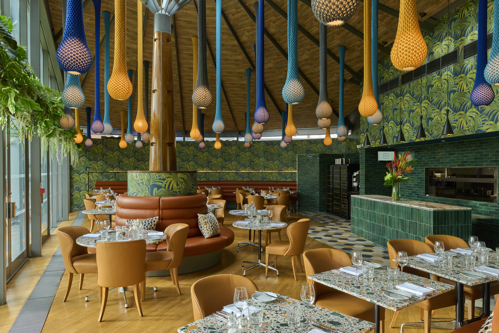
Exeter's food and drink scene has developed into something genuinely worth exploring in its own right, and it reflects the city's wider character well: independent, rooted in strong local produce, and without the self-consciousness that tends to accompany food scenes in more visited cities. The South West's larder is exceptional, and Exeter's restaurants and wine bars make good use of it. It is worth giving the city's independent offer a proper evening before settling into Bistro du Vin, because the two complement each other rather than compete.
Exeter's independent food and drink scene
A mix of neighbourhood restaurants, good wine bars, and a market culture centred on Exeter's covered market and the area around the cathedral give the city a food scene with real range. The South West's produce credentials feed directly into Exeter's menus: Devon seafood, Dartmoor beef, and a strong local dairy tradition all feature prominently, and the quality of ingredients on local menus reflects that proximity.
Bistro du Vin Exeter
Bistro du Vin Exeter is the natural anchor for evenings during a stay. Classical French cooking with a modern sensibility, a wine list that takes its brief seriously, and a terrace and garden that come into their own in warmer months.
The Magdalen Lounge is worth a mention of its own: a room adorned with a mural by Hugo Dalton, opening onto the hotel's walled garden, and a genuinely unusual space for a city-centre bistro. It is the kind of room that makes returning after a day on Dartmoor or along the estuary feel like the right call rather than simply the convenient one.
The spa and the walled garden
Hotel du Vin Exeter's spa is one of the city's better-kept secrets, and it gives the hotel a dimension that most city-centre properties simply cannot offer. A walled garden with a heated outdoor pool in an urban setting is unusual enough anywhere in the UK; finding it within walking distance of a medieval cathedral makes it genuinely surprising. For guests who want to build a stay around more than just sightseeing and dining, the spa gives the trip a different gear entirely.
The packages are designed for a full day rather than a quick treatment. The Tranquili-Tea covers two treatments plus afternoon tea from £115 per person; the Hotel du Vin Spa Retreat includes a 60-minute treatment with a two-course lunch and glass of fizz from £110 per person. A day on Dartmoor followed by a spa afternoon makes a strong two-day structure for a longer break, and the two sit together better than you might expect.
Staying in Exeter with Hotel Du Vin
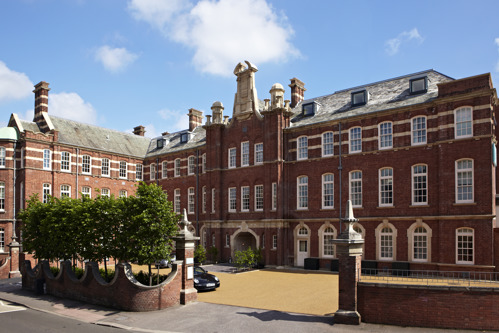
Hotel du Vin Exeter occupies a former Eye Infirmary on Magdalen Street, with individually designed rooms featuring Egyptian cotton sheets, power showers or roll-top baths, and the distinctive aesthetic that runs through all Hotel du Vin properties. Many rooms look out over the walled garden, and the library and Magdalen Lounge are spaces worth lingering in beyond the bistro and bar: this is a hotel where the public rooms reward time rather than just passing through.
The location is genuinely well placed: a short walk from Cathedral Green, close to the Roman city wall circuit, and well positioned for the quayside and the city's independent quarter. Parking is on-site for residents only and must be pre-booked by calling the hotel directly. For those arriving by train, Exeter St Davids is around a 15-minute walk.
For those considering Exeter for a larger occasion, private events and weddings are available at the property. Current Hotel du Vin offers are worth checking when planning your stay.
Book your stay at Hotel du Vin Exeter and discover a city that has far more to offer than most people expect.
Planning your Exeter city break
Getting to Exeter is straightforward from most parts of the UK, and the city is compact enough that you won't need a car once you arrive. The practical questions around timing and length of stay are worth thinking through before you book, because Exeter rewards different itineraries depending on what you want from it: a cultural two-night visit sits alongside a Dartmoor-and-spa long weekend as equally valid versions of the same destination.
Getting to Exeter
Exeter is well connected by rail: London Paddington to Exeter St Davids takes around two hours on the fastest services, Bristol to Exeter around one hour, and Birmingham to Exeter around two and a half hours. Exeter St Davids is around a 15-minute walk from Hotel du Vin.
Exeter Airport handles routes from a range of UK and European destinations for those arriving by air. By road, the M5 connects Exeter to Bristol and the Midlands; parking at the hotel is limited and must be pre-booked.
How long do you need in Exeter?
Two nights is the ideal length for an Exeter city break: a full day for the city itself, covering RAMM, the Underground Passages, and the Quayside, and a second day for Dartmoor or the Avocet Line to Topsham. Three nights opens up a spa day, a further day trip along the Jurassic Coast, or simply a more relaxed pace throughout. More information on Exeter attractions is available on the Hotel du Vin site.
Things to Do In Exeter FAQs
What are the best things to do in Exeter?
Exeter rewards visitors who give it more than a day. The Underground Passages and RAMM cover the city's historical depth, the Avocet Line to Topsham makes for one of the most scenic short rail journeys in England, and Dartmoor is within half an hour for anyone who wants open countryside. The food and arts scene around the Cathedral Quarter is worth a slow evening rather than a quick pass through.
What fun things can adults do in Exeter?
Beyond the heritage stops, Exeter has a genuinely good independent bar and restaurant scene, atmospheric guided tours of the Underground Passages, and estuary walking and cycling trails that stretch south towards the coast. For a more indulgent afternoon, Hotel du Vin's spa with its heated outdoor pool in a walled city-centre garden is the kind of thing most visitors don't expect to find in Exeter until they discover it.
What are the best things to do in and around Exeter?
Topsham is the most rewarding short trip from the city, reachable on the scenic Avocet Line in around 15 minutes. Dartmoor suits those wanting a full day outdoors, with moorland walks and villages accessible within 30 minutes of the city centre. The western end of the Jurassic Coast around Sidmouth and Beer is a strong option for a longer day, and Exeter's rail connections make most destinations reachable without a car.
Is Exeter worth visiting for a city break?
Exeter tends to be underestimated by visitors who have Bath or Bristol in mind as their reference point. It is quieter, more manageable, and has a historical depth that goes well beyond its medieval fabric. Two nights gives enough time to cover the city properly, get out to Dartmoor or Topsham, and return to Bistro du Vin without feeling rushed.
Where should I stay in Exeter for a city break?
Hotel du Vin Exeter occupies a former Eye Infirmary on Magdalen Street, a short walk from Cathedral Green, the Roman city wall circuit, and RAMM. The walled garden, heated outdoor pool, and Bistro du Vin make it a hotel worth spending time in rather than simply sleeping in, which is fairly rare for a city of Exeter's size.